



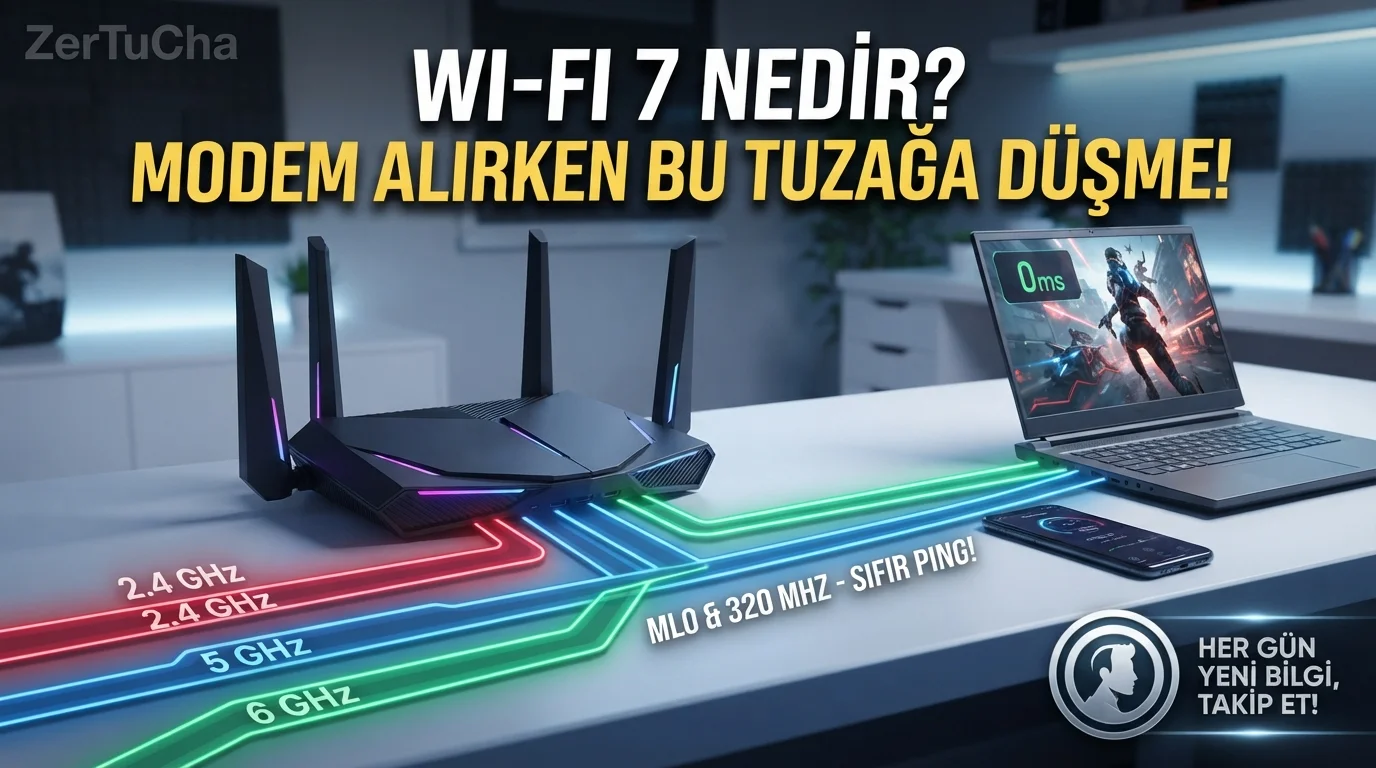
When buying a new fiber modem (router), smartphone or laptop, you now often see a new generation label on the boxes: Wi-Fi 7! Most consumers say, "My internet at home is already 100 or 1000 Mbps, what will the new generation Wi-Fi bring me?" He thinks that this technology is just a theoretical speed increase. However, the real revolution of Wi-Fi 7 is not the speed record, but the famous MLO (Multi-Link Operation) that eliminates instant freezing, ping jumps in games and video call drops technology! Moreover, some affordable routers sold with the "Wi-Fi 7" label in the market actually have the most critical feature 6 GHz band does not host any? The real technical criteria and the official certificate verification screen you need to know before buying a new router or device are right below!
Brief Summary: Wi-Fi 7 (IEEE 802.11be), 320 MHz ultrawide channels and MLO (Multi-Link Operation) technology. When buying a new router, consider 6 GHz band support wi-fi.org.
Leave a Comment to Read the Rest of the Article
Did you find our content useful? We are curious about your thoughts on the subject.
What is Wi-Fi 7 and MLO (Multi-Link Operation) Technology?
Wi-Fi 7 means that devices that were limited to a single frequency band (either 2.4 GHz or 5 GHz) in older generations are now parallel data sending (MLO) over multiple frequency bands simultaneously is the next generation wireless networking standard that provides
On old modems, when the 5 GHz band was blocked by neighboring modems, your game's ping would jump or your video call would freeze. MLO and Multi-RU Puncturing feature, a small section of channel with interference is instantly skipped and traffic is shifted to the clear band within milliseconds.
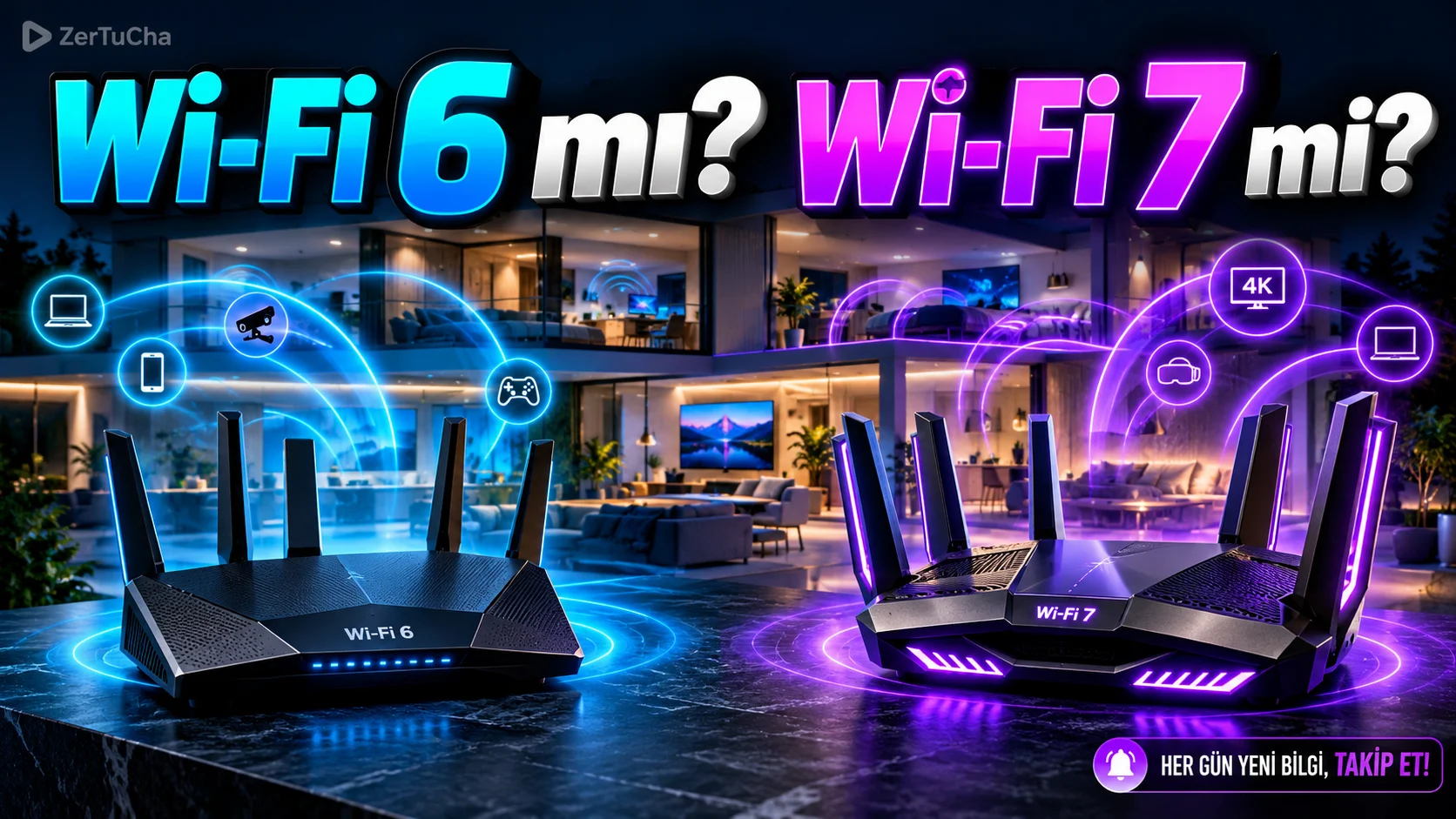
Wi-Fi 6, Wi-Fi 6E and Wi-Fi 7 Technical Comparison
When choosing a new router or computer, the main hardware differences between the three generations are included in the table below.
| Specification | Wi-Fi 6 (802.11ax) | Wi-Fi 6E | Wi-Fi 7 (802.11be) |
|---|---|---|---|
| Frequency Bands | 2.4GHz & 5GHz | 2.4, 5 & 6 GHz | 2.4, 5 & 6 GHz (Simultaneous MLO) |
| Maximum Channel Width | 160MHz | 160MHz | 320 MHz (2x wide highway) |
| Modulation (Data Density) | 1024-QAM | 1024-QAM | 4096-QAM (20% higher data throughput) |
| Latency (Ping) Stability | Good | Very Good | Ultra-low latency close to wired Ethernet |
5 Steps to Avoid Falling into the Trap When Buying a Wi-Fi 7 Router
To avoid clipped models labeled "budget Wi-Fi 7" on the market, make these 5 checks before buying:
- In the technical specifications of the product "Tri-Band (Triple Band: 2.4 + 5 + 6 GHz)" (Dual-Band do not have the 6 GHz and 320 MHz bands!).
- The model code of the device you are considering purchasing https://www.wi-fi.org/product-finder in the official database and Wi-Fi CERTIFIED 7 confirmation.
- The wired ports on the back of the modem must be at least 2.5Gbps (2.5G WAN/LAN); A Wi-Fi 7 modem with a 1 Gbps port throttles over-gigabit local network speeds.
- Even if you do not have a Wi-Fi 7 supported phone/laptop at home yet, remember that Wi-Fi 7 Mesh systems make a huge difference with MLO in inter-node wireless connection (backhaul) in multi-storey or crowded apartments.
- Legal usage channels of the 6 GHz band in Türkiye are determined according to BTK regulations; When bringing a device from abroad, be careful to choose a model compatible with the Europe/Türkiye (ETSI) region.
Security and WPA3 Enforcement
Wi-Fi 7 certification, which is extremely difficult to crack WPA3 encryption standard and enforces enhanced management framework protection. When you install a new Wi-Fi 7 modem in your home network, the safest approach is to open a separate "IoT / Guest 2.4 GHz Network" for old devices and keep your main phones and computers on the WPA3-protected main network.
Frequently Asked Questions
If I buy a Wi-Fi 7 modem, will my old Wi-Fi 5 or Wi-Fi 6 phones connect?
Yes, fully backwards compatible; Your old devices will continue to connect smoothly at the highest speed they support.
My fiber internet at home is 100 Mbps, what benefit does Wi-Fi 7 provide for me?
Your internet speed does not exceed 100 Mbps, but it provides significant stability improvements as it reduces channel conflicts in crowded apartments, stabilizes game ping, and multiplies in-home inter-device file transfer (NAS/LocalSend).
What is the difference between Dual-Band Wi-Fi 7 and Tri-Band Wi-Fi 7?
Dual-Band models use 2.4 GHz and 5 GHz only; The 6 GHz band and 320 MHz channels, which are the real wide open highway of Wi-Fi 7, are only available on Tri-Band models.



No comments yet. Be the first to comment!
Leave a Comment