



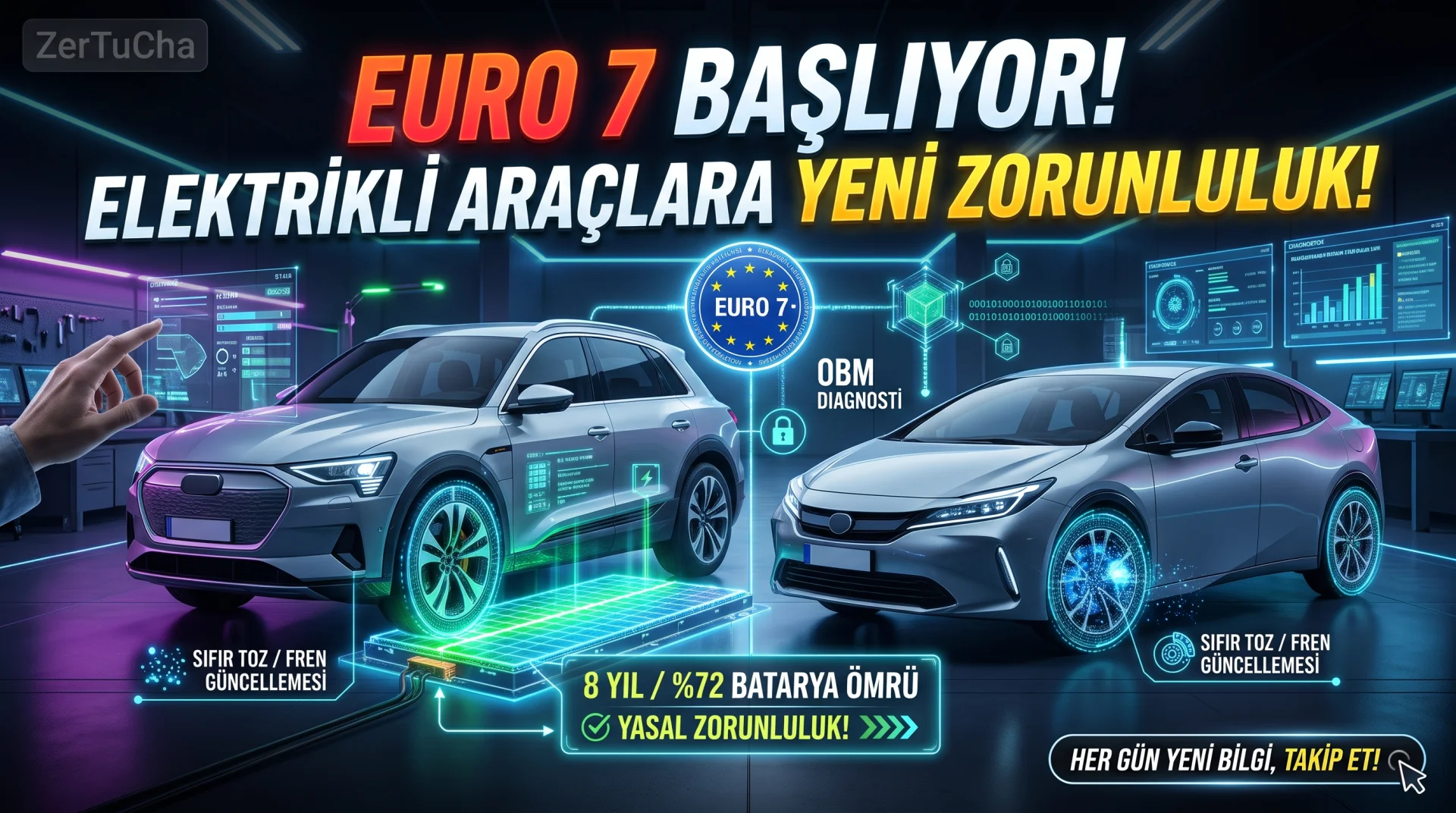
If you think that the "Euro 5" and "Euro 6" standards we have been hearing about for years in the automobile world are only related to the smoke coming out of the exhaust of diesel and gasoline vehicles, the new Euro 7 regulation will completely change your mind! Because for the first time in history a Euro emissions standard directly controls not only exhaust, but also electric cars! The new rules impose two huge legal obligations on automakers: First, they impose strict limits on micro-dust particles released into the air from brake pads and tire wear, even in heavy electric vehicles; Secondly, and most pleasingly for drivers, the batteries of all new electric and rechargeable hybrid vehicles Legal durability guarantee regarding the minimum percentage capacity it will maintain after 5 years and 8 years is becoming mandatory! The Euro 7 calendar and rules you need to know when buying a new vehicle are right below!
Leave a Comment to Read the Rest of the Article
Did you find our content useful? We are curious about your thoughts on the subject.
Brief Summary: Euro 7 (Directive EU 2024/1257) has, for the first time in history, not only the exhaust gases but also the emissions of all automobiles, including electric vehicles brake and tire dust emissions limiting and electric vehicle batteries 80% minimum capacity (SoH) in 5 years, 72% in 8 years is the new European standard that imposes legal durability requirements.
What is the Euro 7 Standard and What Does It Bring to Electric Vehicles?
Euro 7 is the most up-to-date legislation that determines the environmental and technical durability rules of the European Union and EU type approved new generation passenger and commercial vehicles to be sold in the Turkish automobile market. For passenger cars with new type approval November 2026, and November 2027 schedule.
The biggest gain for consumers Electric Vehicle Battery Endurance rule: Manufacturers can no longer leave battery life solely to their marketing guarantee; Legally, passenger EV and PHEV batteries are at least 5 years / 100,000 km 80%, at least 72% must maintain health (SoH).
Euro 6 and New Euro 7 Standard Comparison Chart
The main technical differences between the old Euro 6 rules and the new Euro 7 period are listed in the table below.
| Criteria | Euro 6 Standard | New Euro 7 Standard (2026–2027) |
|---|---|---|
| Brake Pad Particle Limit | None | Compulsory (3 mg/km for EVs, 7 mg/km for others) |
| Tire Wear Dust Limit | None | Legal limit introduced for the first time |
| EV Battery Life Mandate | None | 5 years / 100 thousand km 80% — 8 years / 160 thousand km 72% SoH |
| On-Board Health Monitoring (OBM) | Simple fault light (OBD) | Instantaneous emission and battery health sensor + Environmental Passport |
5 Things You Need to Know When Buying a New or Second-Hand Vehicle During the Euro 7 Period
We can summarize the reflections of the new regulation on vehicle owners and buyers in Türkiye in the following 5 items:
- Official Environmental Passport (EVP): With Euro 7, every new car will have a digital Environmental Passport.
- Continuous Battery Health Monitoring (OBM): New electric vehicles will be able to monitor the actual battery health (SoH) with a standardized transparent system, without even the need for an external expert device.
- Brake Dust and Regenerative Brake Advantage: While electric vehicles easily meet the brake dust limit because they use engine braking (regenerative braking) instead of friction disc brakes, new generation coated brake discs and low-dust pads will become common in internal combustion vehicles.
- Current Euro 6 Vehicles Are Not Banned: You can continue to use your existing Euro 5 or Euro 6 vehicle; Euro 7 only determines the production rules for post-calendar new type approved and new vehicles.
- Official regulation text and commercial vehicle (2028–2029 for trucks/bus) calendar https://eur-lex.europa.eu/eli/reg/2024/1257/oj.
Consumer and Market Impact
Euro 7 prevents the discontinuation of small economical gasoline vehicles by softening the excessive exhaust tightening expected in internal combustion engines; to electric vehicle buyers legal battery life protection brings great confidence to the second-hand electric car market.
Frequently Asked Questions
When exactly does the Euro 7 standard start for automobiles?
30 months after the Regulation comes into force, i.e. November 29, 2026, November 29, 2027, it will be mandatory for all new passenger cars sold in the EU market.
Do Euro 7 rules significantly increase new car prices?
According to the European Commission impact analysis, since exhaust limits are largely preserved in Euro 6d, the increase in production costs per vehicle has been limited to a few hundred Euros instead of thousands of Euros in the first drafts.
Does Euro 7 affect vehicles in Türkiye even though Türkiye is not a member of the EU?
Yes. Since Türkiye is compliant with the Customs Union and EU Type Approval (MARTOY) legislation, all new automobiles produced and imported in Türkiye are updated in parallel with European standards.



No comments yet. Be the first to comment!
Leave a Comment