

YouTube Music Starts Tagging Songs Generated with Artificial Intelligence: How Will You Understand the Music You Listen to?
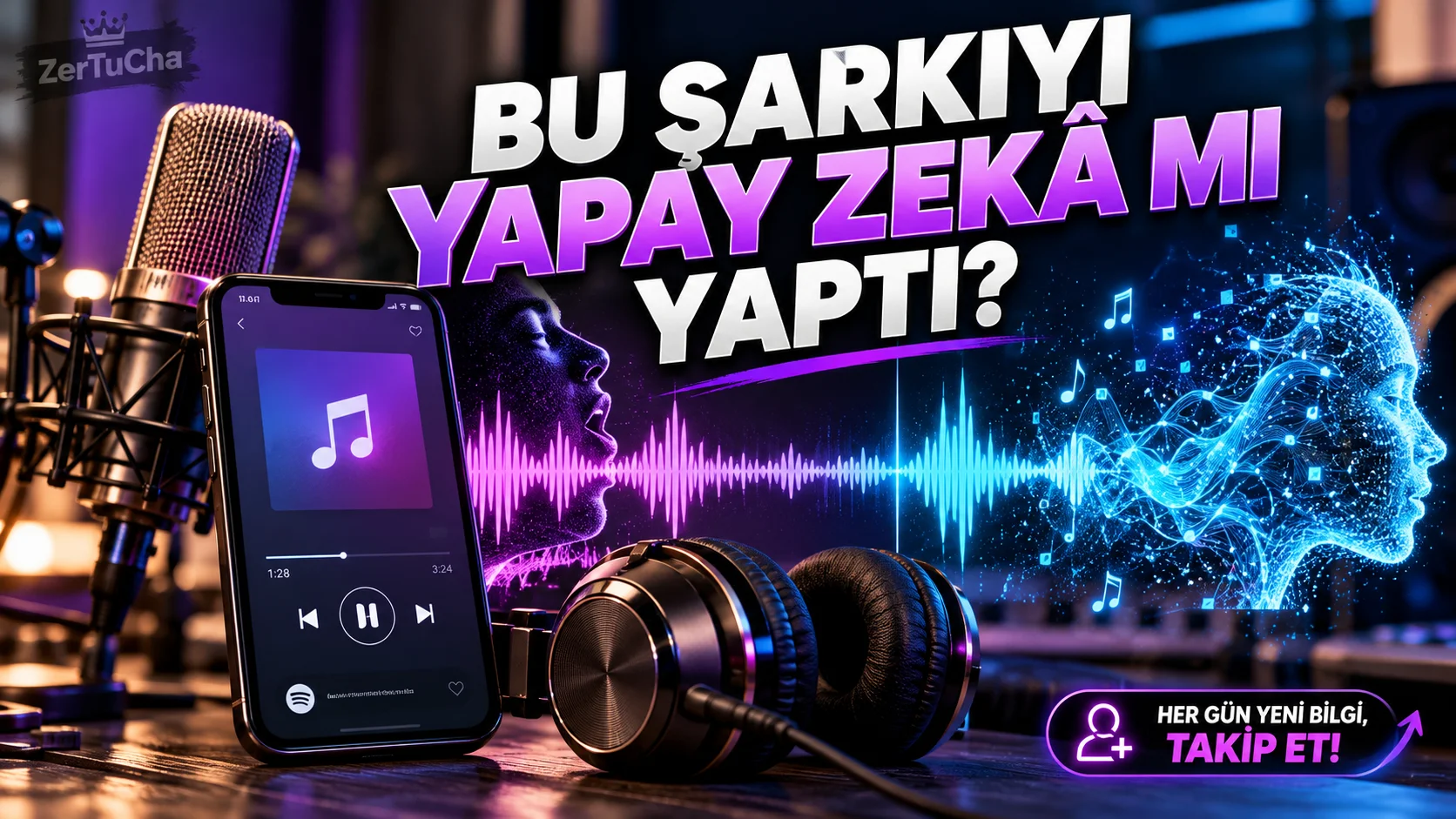
When listening to a song, is there a real musician or artificial intelligence behind it?
Producing music with artificial intelligence is becoming increasingly easier. Vocals, melody and even a full song can be created with a few lines of description.
This situation raises a new question for the listeners: How will I understand that the song I am listening to was produced with the help of artificial intelligence?
In Ars Technica's news dated October 15, 2026, it is reported that YouTube Music is working on new labels for music produced with artificial intelligence and that the labels are gradually becoming available. The news also mentions a wider distribution plan on YouTube.
What will the label change?
Tagging on a music platform can affect how the track is presented to the listener. The user can evaluate the content more consciously by learning that a work is produced by artificial intelligence or that artificial intelligence is used in its production.
But there is an important distinction here: A part produced with artificial intelligence does not necessarily mean that it is completely produced by a machine. A musician may have used AI tools in vocal cleaning, arranging, sound synthesis or other production stages.
Therefore, it is important under what conditions the labels are displayed. If the tag only covers tracks that use certain means of production, it may not capture all AI-powered music.
What can you do as a listener?
If you use YouTube Music, you can follow this approach to evaluate these tags:
-
Use the current version of the application. If labels are distributed gradually, they may not appear on everyone's screen at the same time.
-
Check the detail screen of the part. Examine which area the new tags appear in.
-
Read the full statement of the label. "Generated with AI" and "Edited using AI" may not mean the same thing.
-
See artist and publisher descriptions. Additional information about the part's manufacturing process can be found.
-
Do not consider absence of tag as evidence. The absence of an AI label on a piece does not necessarily indicate that AI is not used.
-
Report suspicious content to the platform. If you see a track that impersonates another artist or is presented in a misleading manner, use the platform's reporting tools.
The menu path and the area where the label is displayed may vary depending on the version. Additionally, this feature may not be available in every region and in every part at the same time.
Does the AI tag solve copyright?
No. Stating that content is generated by artificial intelligence does not automatically resolve all issues such as copyright, voice impersonation, or unauthorized use of artist identity.
Tagging can be a step towards transparency; However, it does not alone explain who produced the music, what data-trained systems were used, or what rights apply.
Quick conclusion: Tagging AI music can help the listener learn more about the content. However, labels should not be considered as a definitive test of reality, but as a sign of information about the production process.

Henüz yorum yapılmamış. İlk yorumu siz yapın!
Bir Yorum Bırakın