

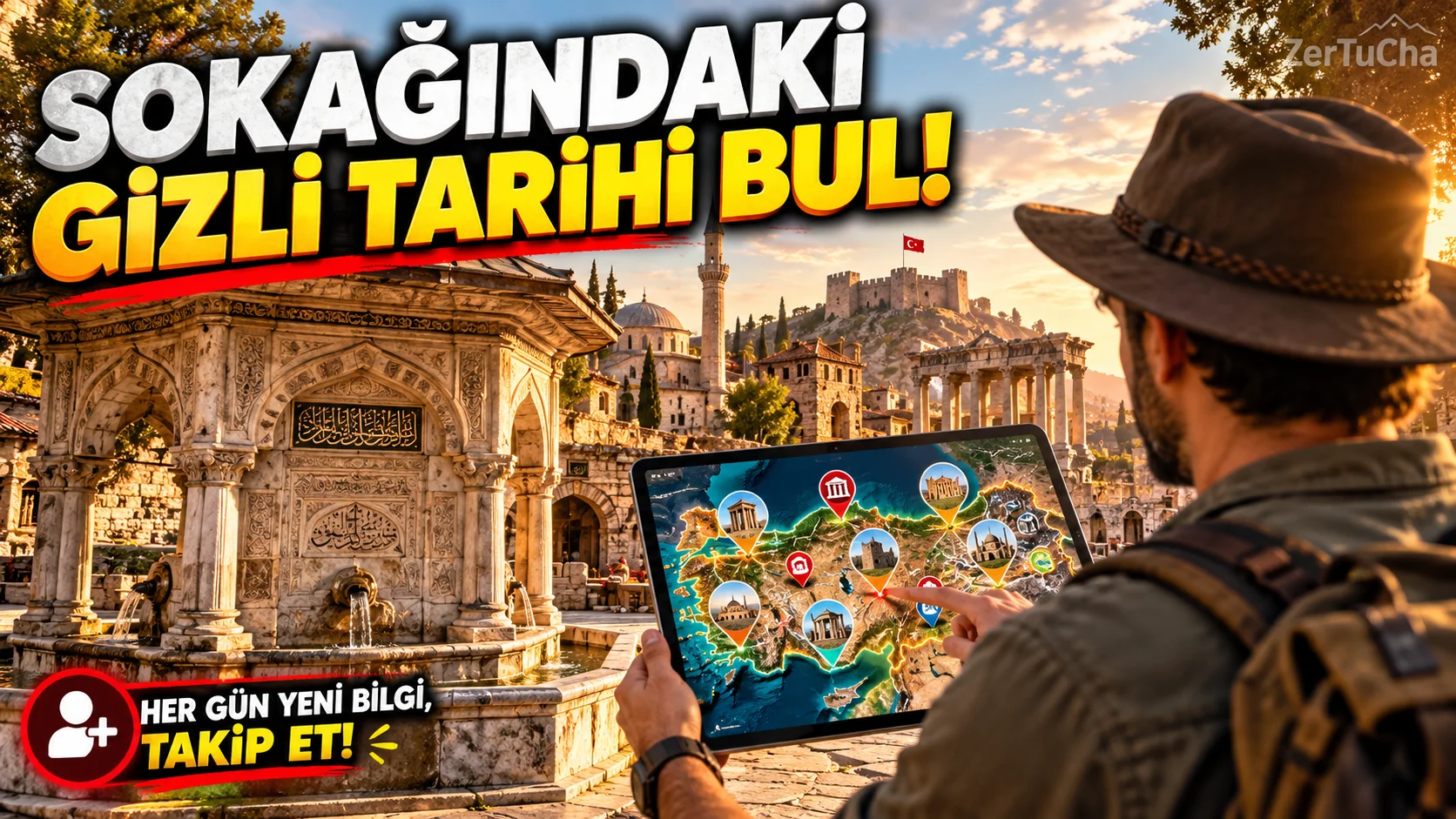
Discover the Hidden History on Your Street! Türkiye's Most Comprehensive Digital Cultural Atlas: Culture Inventory
SITE NAME AND LINKS:
Site Name: Culture Inventory
Official URL: https://kulturenvanteri.com/
Have you ever wondered what century that old stone fountain, abandoned mansion or ruined tower on the hill you pass by on a weekend trip or on your way to work every day is from and who built it? Standard map apps only show you popular tourist museums and cafes; It does not show the Ottoman fountains, Seljuk tombs, ancient aqueducts or the old places of lost structures left among the neighborhoods. Cultural Inventory is a huge digital memory project that maps tens of thousands of cultural assets in Turkey, Anatolia, the Balkans and the Middle East with pinpoint coordinates.
The most powerful feature that distinguishes the platform from similar travel blogs is that the structures are documented with academic bibliographies, archive photographs, period/culture classifications and structural relationships, regardless of whether they are registered or not. User Guide page, each cultural property; It can be filtered by the 5-stage administrative region as Country, Region, Province, District and Neighborhood/Village, with the Century in which it was built (e.g. 8th century BC or 18th century), Culture to which it belongs (Hittite, Roman, Byzantine, Seljuk, Ottoman) and Theme (Mimar Sinan's Works, Female Patrons, Water Structures) tags.
STEP-BY-STEP USE: Step 1 - Open Map or Search Screen: https://kulturenvanteri.com/ and directly select Map tab or Explore (for a full map view on mobile devices, it is recommended that you turn your phone horizontally). Step 2 - See Properties Nearby: Click the Show My Location icon in the lower right corner of the map to view all registered historical buildings in your street and district on the map with color-coded markers. Step 3 - Apply Multi-Intersection Filter: For example, if you want to find 16th century water structures in Bursa or Edirne, select Region, Culture (Ottoman), Century (16th century) and Type (Fountain / Aqueduct) from the filter box and arrange the results on the map with the Map - List button at the top right. Step 4 - Examine the Building Card and Bibliography: Click on a point on the map to examine the history of the building, old archive engravings, if any, its current situation and the social complex or ancient city to which it is connected via the Related Places link. Step 5 - Get Direct Directions or Contribute: Create your route via Google Maps by clicking the Get directions link on the page of the work you want to visit; If you notice any missing information, use the Suggest Correction button at the bottom right.
REQUIREMENTS AND LIMITS: Membership and Fee: Research and map use are completely free, there is no registration requirement. Mobile Map Tip: In the official guide As stated, when logging in from a smartphone, it is necessary to turn the phone to a horizontal position to view the map view in full screen. Visual and Copyright Standards: Volunteers who want to contribute to the system cannot upload random photos from the internet; They can only add high-resolution photographs they have taken (jpg between 1024px and 1920px on the longest side) or copyrighted official archive images by specifying the source.
PRIVACY AND SECURITY: Location Permission: Your browser requests instant geolocation permission only when you use the Show My Location or Get Directions feature on the map; You can search all cities and neighborhoods manually without giving this permission. Personal Data: As a reader, you do not need to enter any personal data on the site; If you want to participate as a volunteer editor, an account is created with your username and e-mail information.
ADVANTAGES, DISADVANTAGES AND WHOM IT IS SUITABLE FOR: Advantages: It includes thousands of local cultural assets that are not included in tourist guides; offers filtering by century, civilization, and architectural type; It has Turkish, English and German language support. Disadvantages: Because it thrives on voluntary and editorial input, records in some rural areas may be short on photo or text details; Map usage on the mobile portrait screen is narrower than on the desktop. Suitable For: It is a unique treasure for cultural travelers, history and architecture students, photographers, documentary and content producers, teachers and anyone who is curious about the history of the city they live in.
SHORT BOTTOM LINE: Before you travel to a new city or when planning a weekend walk in your own neighborhood Cultural Inventory Map turns an ordinary trip into an open-air museum experience.



Henüz yorum yapılmamış. İlk yorumu siz yapın!
Bir Yorum Bırakın